The enormous plastic vortex drifting in the middle of the Pacific Ocean has been one of the most severe symbols of global pollution for decades. However, the latest research has revealed a surprising phenomenon: the garbage patch is not merely a waste collection area, but is increasingly becoming a peculiar, floating habitat where entire communities of coastal marine species have settled and can persist for generations. According to scientists, this simultaneously demonstrates nature’s adaptability and how deeply human-generated plastic waste is capable of transforming the ecological systems of the oceans.
Ocean plastic pollution continues to be one of the most severe global environmental problems. Over recent decades, a significant portion of the enormous amount of plastic produced by humanity has ended up in the seas, where it breaks down extremely slowly while fragmenting into ever smaller pieces. The impact of the garbage patch on marine life is highly multifaceted: plastic fragments can cause physical injuries to animals, accumulate toxic chemicals on their surfaces, and frequently end up in the stomachs of fish, seabirds, and marine mammals.
One of the most well-known symbols of the problem is the Great Pacific Garbage Patch, located in the northern Pacific Ocean — this oceanic area has been one of the most striking examples of plastic pollution for decades. The latest research, however, suggests that the phenomenon is not only an environmental catastrophe, but also a peculiar, unintentionally created ecological experiment in which nature — at least partially — is trying to adapt to the new conditions.
A Problem That Has Grown to 17 Times the Size of Hungary
The Great Pacific Garbage Patch is located in the area of the North Pacific Subtropical Gyre, roughly between Hawaii and California. This enormous, circularly flowing water system naturally collects floating debris and does not easily allow it to disperse across the ocean.
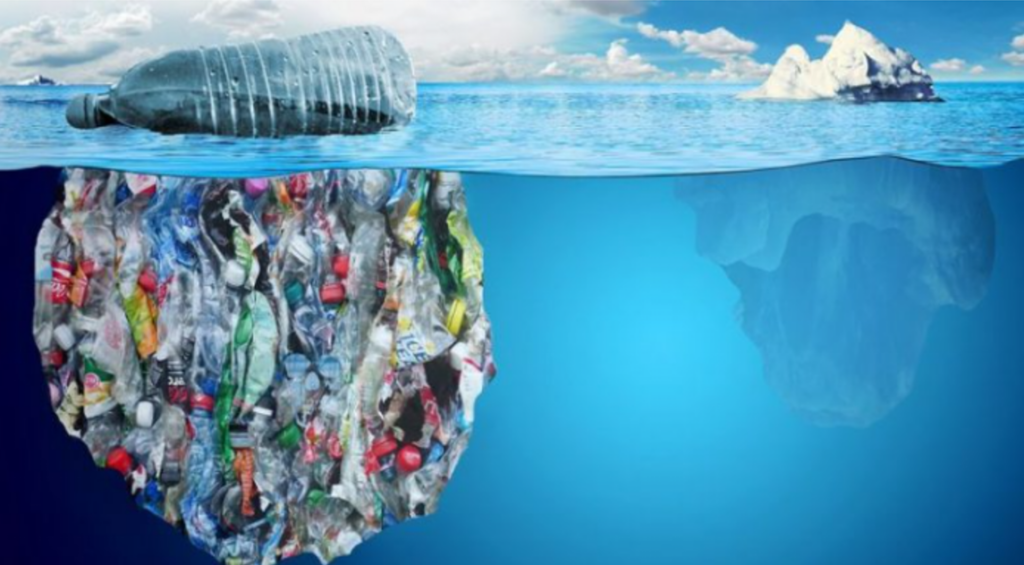
Because of this, it was long imagined that the garbage patch was a single, massive, solid plastic island. The reality, however, is quite different: it is an extraordinarily vast, diffuse area where the concentration of plastic is higher compared to the surrounding ocean but does not form a continuous island.
Estimates suggest that approximately 1.8 trillion pieces of plastic are found here, with a total mass of around 80,000 tonnes, and the affected area can reach 1.6 million square kilometres — more than 17 times the size of Hungary’s approximately 93,000 square kilometres.
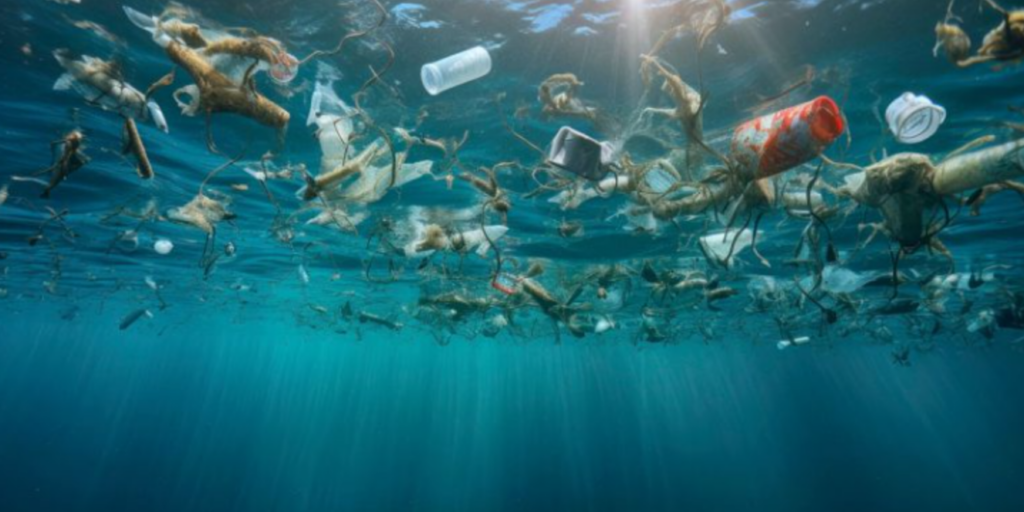
Most of the debris consists of tiny plastic pieces and microplastics, but many larger objects also drift in the area. These include fishing nets, ropes, plastic crates, buoys, buckets, bottles, and various packaging materials; some of these objects can remain on the water for years or even decades — as reported by the Economic Times. Of course, these gradually fade, crack, and thin under the effects of sunlight and wave action, yet they continue to float while providing a solid surface for living organisms.
A significant portion of the plastic originates from industrial fishing — for example, from lost or discarded nets and other equipment made from extremely durable materials. However, everyday waste also plays a role in the pollution: bottles, crates, containers, and other packaging materials that originally entered circulation as packaging for everyday products at various points around the world.
Sadly, Plastic May Extend the Habitat of Coastal Organisms
Marine biology textbooks long described the open ocean as a kind of biological desert for coastal organisms. Creatures living near coasts — such as mussels, barnacles, or various crustaceans — are generally attached to solid surfaces like rocks, piers, or coral reefs. In the open sea, however, these stable surfaces are absent, so if a coastal organism became detached from its original habitat, the scientific assumption was that it would eventually perish, as it could not find a new anchoring surface, food supply was unpredictable, and drifting natural debris — such as driftwood — decomposed or sank relatively quickly. Plastic, however, has fundamentally changed this picture.
A study published in Nature Ecology & Evolution has placed the role of the Great Pacific Garbage Patch in a new light. Researchers examined 105 larger plastic pieces collected from the area between 2018 and 2019. The results were truly surprising: living organisms were found on virtually every single floating plastic object. The researchers identified a total of 46 different invertebrate taxa, and of these, 37 were species that under normal circumstances are found primarily in coastal habitats.
The research group — which worked in collaboration with The Ocean Cleanup nonprofit organisation within the FloatEco project — also established that coastal species were present on more than 70 percent of the examined debris pieces.
This means that these organisms are not merely drifting on plastics for a short time, but are permanently settling on them.
Among the organisms found on the plastic pieces were numerous species that normally live in harbours or rocky coastal areas. The researchers identified, for example, goose barnacles, sea anemones, hydroids, amphipods, smaller crustacean species, and bryozoans on the floating plastic. Moreover, based on the investigations, many species may have originally come from the western coast of the Pacific Ocean, for example from around Japan.
However, the scientists did not find exclusively adult specimens — signs of reproduction were also observable on the plastic pieces. This suggests that the organisms are not merely surviving on plastic drifting in the open sea, but are able to reproduce there across generations.
New Communities Forming
Research has also shown that certain plastic objects provide particularly favourable habitats. Fishing nets and ropes, for example, have extremely complex structures; their knots and loops create tiny cavities and tunnels that offer protection against wave action and shelter from predators. It is therefore unsurprising that these devices harbour particularly rich wildlife. During the study, for example, a single rope carried 24 different taxa, while fishing nets showed the greatest species diversity, where coastal and open-sea organisms lived together on the same floating surface.
For this reason, scientists have also introduced a new concept for such peculiar communities: these have been called neopelagic communities.
This is a hybrid ecosystem in which coastal and open-sea species coexist on an artificial, human-created substrate — namely, plastic.
In nature, floating surfaces did previously exist — such as the aforementioned driftwood or volcanic pumice — but these generally decompose or sink relatively quickly. Plastic, however, resists decomposition for decades, thus providing a stable surface for organisms over a long period of time.
A 2022 study in the journal Environmental Science and Technology also demonstrated that larger plastic pieces — such as nets or crates — function as actual artificial reefs on the ocean surface. On these surfaces, complex ecological relationships can already be observed among organisms, including predation, competition, and feeding interactions, indicating that these communities have become functioning ecosystems.
Marine debris
Photo: Roland Ladányi / Don’t waste it!
Nature’s Adaptation Is Not a Solution
At first glance, it might seem that nature is creatively adapting to plastic pollution; however, researchers emphasise that this does not mean restoration of ecological balance, but rather a forced adaptation to artificial conditions.
One of the greatest risks is the spread of invasive species. Previously, coastal organisms rarely reached distant islands, because they could not survive long-term in the open sea. Plastic, however, functions as a raft drifting for years, allowing organisms to cross entire ocean basins. According to researchers, for example, the currents originating from the garbage patch mean that the Hawaiian Islands are particularly exposed to the arrival of foreign species on plastic debris. However, if these new species become established, they may contact with native corals, algae, and invertebrates on reefs that are already under serious stress from climate change, pollution, and overfishing.
Another major problem of plastic is its impact on food webs. Microplastics can accumulate toxic substances and are ingested by numerous marine animals. A 2016 study concluded that
hundreds of marine species already consume plastic pieces, which mya cause internal injuries, poisoning, or energy deficiency.
The Great Pacific Garbage Patch therefore represents a peculiar duality: it is simultaneously one of the most striking examples of global pollution and an unintentional ecological experiment. According to marine ecologists, plastic has essentially created a new type of habitat on a planetary scale, since there were previously very few natural floating objects on the ocean surface, while plastic has dramatically increased the amount of available anchoring surfaces.
This could fundamentally change species distribution, ecological relationships, and even evolutionary processes. Researchers, however, emphasise that the life appearing on the garbage patch does not represent the solution to the problem, but is merely further evidence of how deeply human activity is transforming the functioning of the oceans. So it is still worth taking notice — and taking action.
Source: Index.hu
Further information: https://www.nature.com/articles/s41559-023-01997-y