
10.07.2026
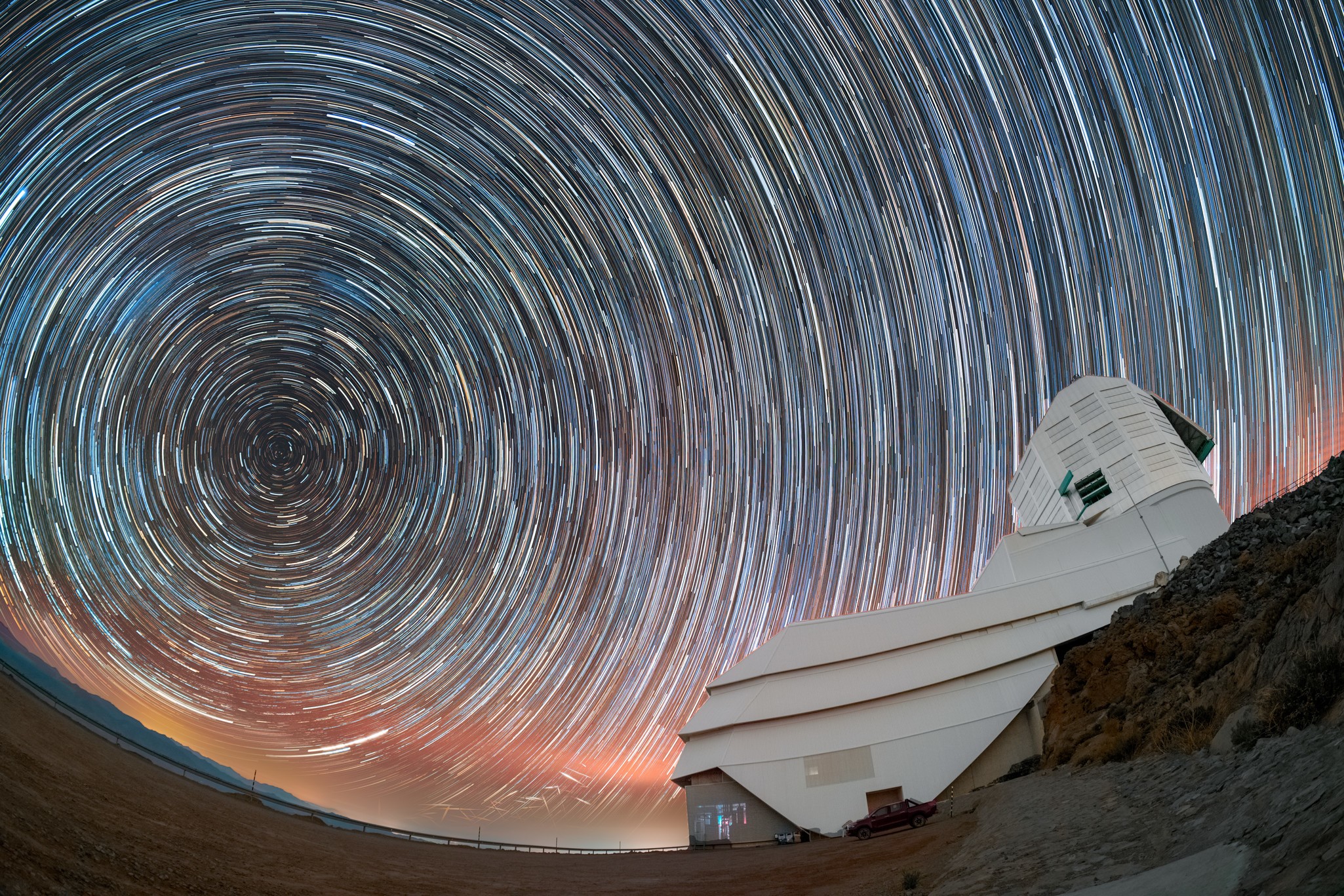
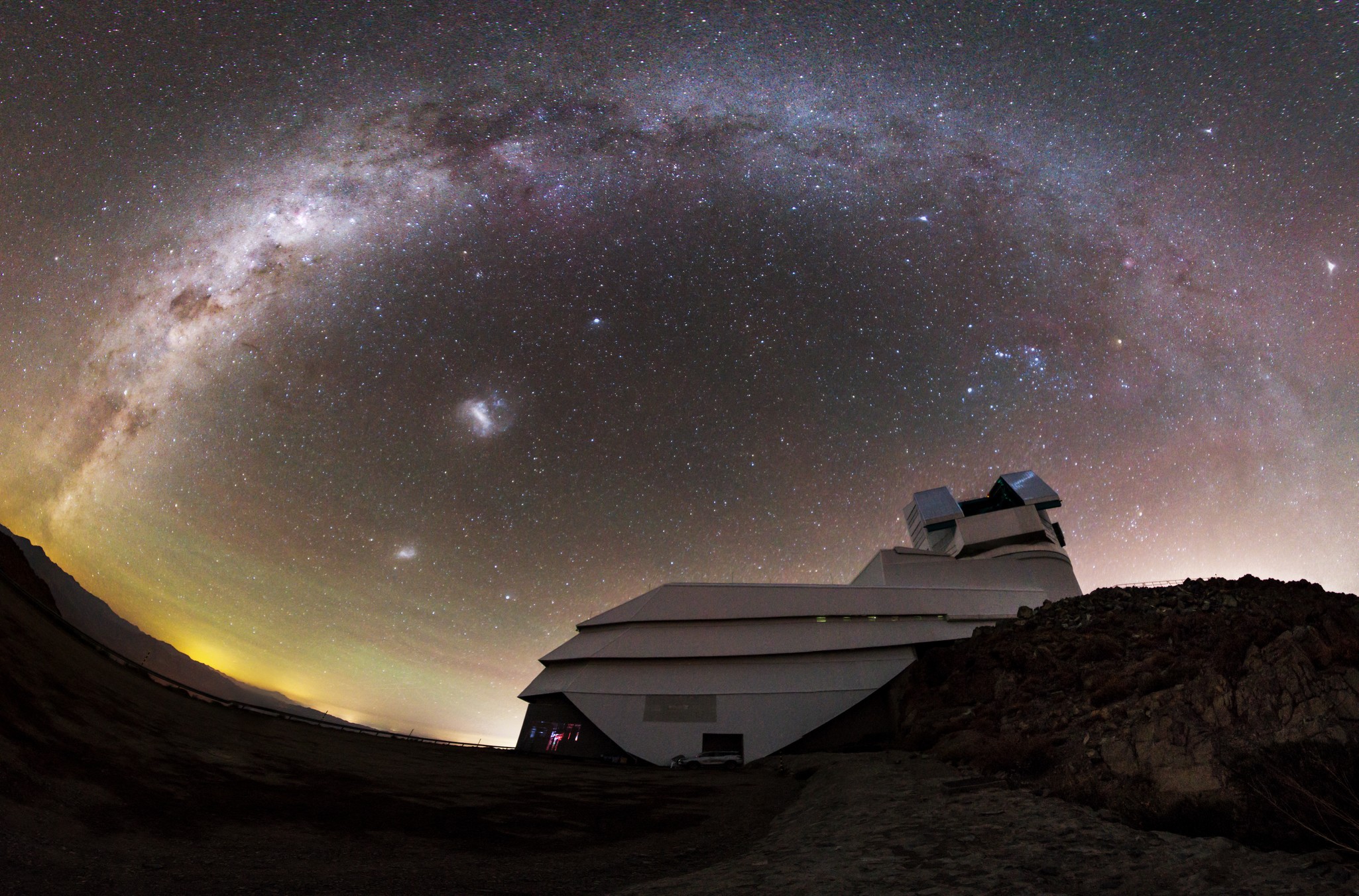
On 30 June 2026, beneath clear, dark skies atop a Chilean mountain, the Vera C. Rubin Observatory officially launched its ten-year sky-survey programme, the Legacy Survey of Space and Time (LSST). Twenty-five Hungarian researchers are taking part in the project, and Budapest will host the programme’s European conference this September.
The Rubin Observatory is funded by the US National Science Foundation (NSF) and the Department of Energy (DOE), and is operated by NSF NOIRLab and the SLAC National Accelerator Laboratory. What truly sets it apart is not any single standout feature, but an unusual combination of three: enormous light-collecting power, extremely rapid movement across the sky, and a very wide field of view. Whilst most large telescopes manage to combine only one or two of these well, Rubin combines all three.
In practice, this means that the observatory’s 8.4-metre mirror and 3,200-megapixel camera — currently the largest digital camera in the world — capture a new, richly detailed image roughly every 40 seconds, allowing it to photograph the entire southern sky every few days. Over ten years, it will return to every point in the sky around 800 times, producing not a single snapshot but an extraordinarily deep, high-resolution colour “movie” of the universe. It is this continuous, regular return to the same patch of sky that makes it possible to capture slow, unpredictable or rare phenomena that a single observation could never catch.
The sheer volume of data is equally unprecedented: the observatory collects around ten terabytes of data every night and can generate up to seven million automated alerts about changes detected in the sky — such as new sources of light, moving objects, or variations in brightness. These are classified by automated “alert broker” systems, allowing researchers to respond as quickly as possible, for instance by using other telescopes to track an exploding star or the collision of two compact objects.
A detailed map of the Solar System
The observatory’s capabilities were already evident during the few weeks of testing before its official launch, when Rubin made a series of significant discoveries: it identified more than 11,000 previously unknown asteroids, including 33 near-Earth objects and 380 trans-Neptunian objects. Over the coming decade, the programme will compile the most detailed inventory of the Solar System ever produced, with millions of asteroids and numerous comets expected to be discovered — including interstellar visitors originating from beyond our own Solar System.
Beyond mapping celestial bodies, Rubin also opens the door to a wide range of other scientific investigations. Among its goals is the study of dark matter and dark energy, primarily through measurements of what is known as weak gravitational lensing: tiny distortions in the shapes of background galaxies can reveal how invisible matter is distributed. Data from Rubin are also likely to bring us closer to answering a question that remains open: whether dark energy is truly a constant cosmological parameter, or whether it changes over time, as some results from earlier measurements have suggested.
A major Hungarian contribution
Besides American and Chilean researchers, experts from 43 countries are taking part in the Rubin programme, including 25 Hungarian researchers from the HUN-REN Research Centre for Astronomy and Earth Sciences’ Konkoly Thege Miklós Astronomical Institute, ELTE’s Institute of Physics and Astronomy, and ELTE’s Gothard Astrophysical Observatory in Szombathely. The Hungarian group contributes mainly through software development as part of the so-called in-kind programme, in return for which it receives immediate access to Rubin’s data.
“In terms of the scientific work, Hungarian researchers will be involved in research on variable stars and astrophysical transients, in exploring the Solar System, and in cosmological studies and large-scale surveys of the universe,” said Róbert Szabó, head of the Hungarian LSST group and director of the HUN-REN CSFK Astronomical Institute. He added that, at the end of September 2026, Hungary will host the eighth event in the LSST@Europe conference series, welcoming around 150 participants from abroad — making Budapest, for one week, Europe’s LSST capital.
The project has another, lesser-known Hungarian connection: the survey telescope itself, with its 8.4-metre primary mirror, is named after Charles Simonyi, the Hungarian- American businessman and software developer — hence the Simonyi Survey Telescope. An early, substantial private donation from Simonyi made it possible for the project’s design work and the construction of the mirror to begin even before official government funding was secured. The observatory itself is named after Vera Rubin (1928–2016), the American astronomer who, through her studies of galaxy rotation curves in the 1970s, provided some of the most compelling early evidence for the existence of dark matter.
Data for everyone
By the end of the LSST programme, the final dataset is expected to contain several billion celestial objects and several trillion individual measurements. This will be the first time that such a vast quantity of astronomical data has been made freely available to so many people: alerts will be public immediately, while more detailed data will become available two years after being recorded — not only to researchers, but also to interested amateurs and the general public.
(A 1.7-gigapixel photograph of the area around the constellation Lupus, visible from the southern hemisphere, can be downloaded from this link: https://rubinobservatory.org/gallery/collections/main-gallery/crqjetm47t4g3e2sshbv2hll4u).


Fotók: NSF–DOE Rubin Observatory/NOIRLab/SLAC/AURA